Our friends at Maharam recently stopped by the studio to take a look at one of Todd's treasures that he found at flea market in the 80s! Click here to read the full story!
Jenn Falik, style and beauty expert, featured Kid Made Modern on the Today Show as one of her favorite products for 2012! We appear at 1:25 in the clip. We can't thank her enough for all her kind words! Be on the look out for Kid Made Modern at Target May 20th!
Tuesday, February 14th join Todd Oldham for a talk about legendary designer Alexander Girard. There will be a lecture and discussion at 6PM with a reception to follow.
Location:
Pratt Institute, Brooklyn Campus
Higgins Hall, Center Section Auditorium
61 St. James Place (at the corner of Lafayette Avenue)
This event is free and open to everyone! Click here for more information or call 718.636.3630
Fish's Eddy moves to the UK, and takes Charley Harper with them! The Harper collection will be sold at Liberty in London with Fish's Eddy beginning this February. You can view the collection online or in store, and be on the lookout for the Harper bird collection to be released later this year!
Back in September Todd photographed Amy Sedaris for her interview with Bullett Magazine. Recently NY Magazine included the photos in a slideshow featuring December's best entertainment photography! Click here to see the full gallery, Amy is Slide 12!
You're Supposed to Act All Impressed — Wayne White talks — see it LIVE! in Los Angeles! He talks about his work, his life and even plays a little banjo & harmonica. Wayne will be signing his monograph edited & designed by Todd Oldham after the show. Break a leg Wayne!
Every Tuesday in February
8PM Admission $20 Largo at the Coronet 366 N. La Cienega LA CA
The lovely & amazing Amy Sedaris was on the Wendy Williams Show earlier this week promoting her new book, Simple Times : Crafts for Poor People. She wore a sparkly bracelet made by Todd Oldham from your average, everyday aluminum foil. Ohhhh Ahhhh! Make your own foil bracelet at home. Instructions found in Todd's book, Kid Made Modern.
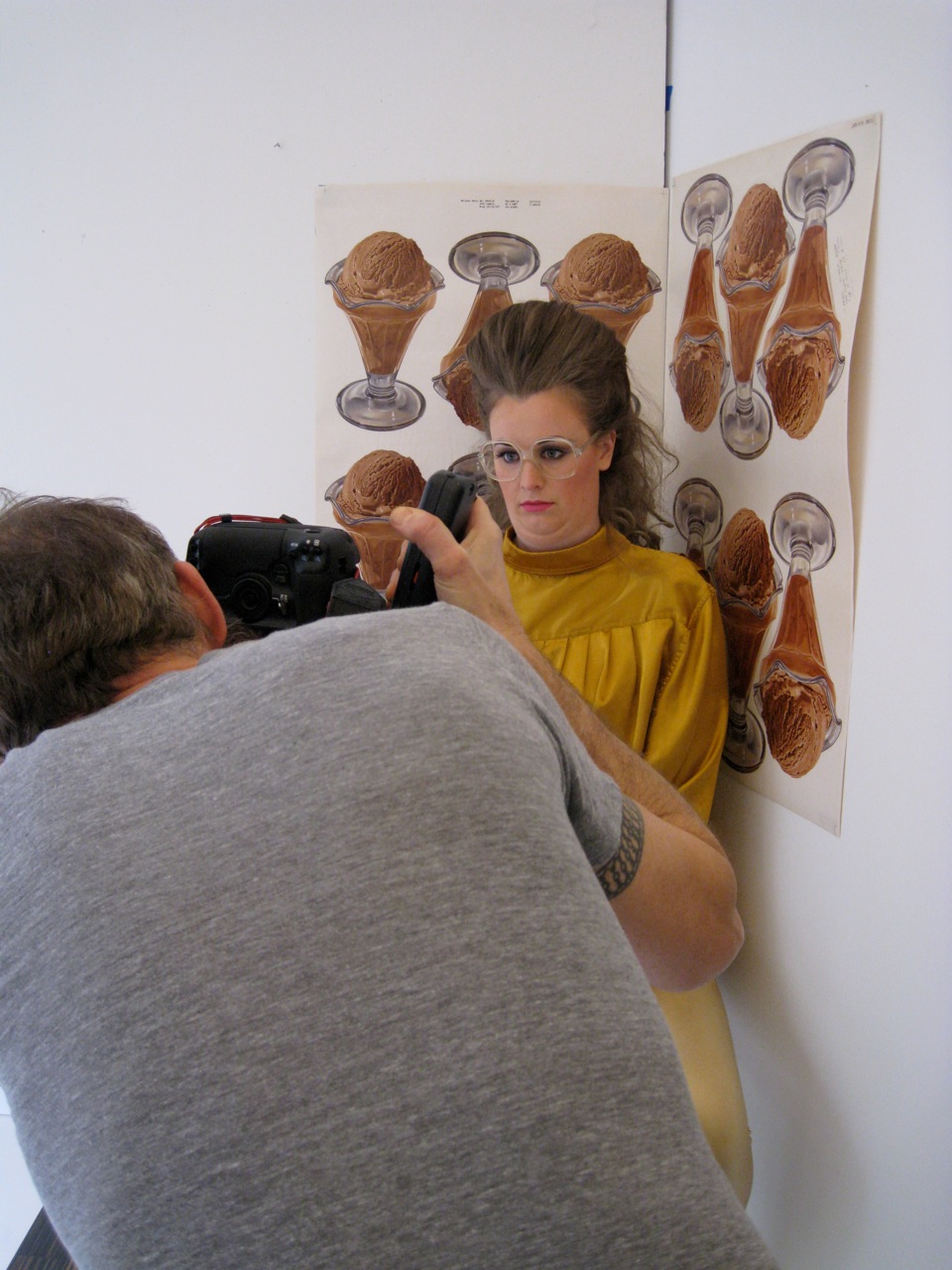
On Tuesday the rap game's gem sweater sweetheart LESLIE HALL stopped by the studio for a photo shoot (of course there were multiple wardrobe changes). Recommended: HERE WE GO OUT on repeat.
Then fun time family Mark Todd, Esther Pearl Watson and Lili dropped in and unloaded and arm full of zines we fought each other for. There's so many and you really need all of them. Get em HERE. (& if your in Brooklyn Check out Mark's show at MISHKA)
Ding Dong! All hell broke loose when Amy Sedaris burst in. She's been holed up working on her NEW BOOK! She owed Leslie $100 for some reason or another, and snuck in the frame for a few shots.
It was as fun as it looked! Thanks to everyone for stopping by, we'll see you soon!
I had the great pleasure of being asked this year to curate the program for the Wolfsonian Museum in South Beach during the mind bending art-apalooza that is Art Basel. Every December collectors, artists, curators and galleries descend on Miami Beach for 5 days of art, exploration and excess. This year attendance seemed a little lower, but with the current economic hiccups this is no surprise. There are many separate art fairs that pop up ranging from the extravagant museum sale vibe of the main Art Basel fair held in the Miami convention center, to the charming, challenging and peculiar presentations at fairs like NADA, SCOPE and PULSE. There is no quicker way to get an overview of the world of new ideas in art than a visit to Art Basel Miami Beach.
I have been a long time fan of the Wolfsonian. They are a very unique presence in the museum world. The Wolfsonian’s main focus are acquisitions of extraordinary objects and paintings mostly from the 1800s to 1945 with occasional spectacular exceptions. I spent several days reviewing the archives and storage vaults of the Wolfsonian early in the summer to ultimately choose the objects to be included in my curatorial efforts highlighting the permanent collection. To describe this as a feast of riches so understates the experience and I will never forget seeing so many design marvels at one place. At the same time I was pulling together my edit I wanted to include alternative points of view on the collection. I asked artists Brock Shorno, Wayne White, and Megan Whitmarsh to join the celebration with the task of commenting on the collection in whatever way was interesting to them.
Wayne White—a remarkable painter, sculptor and wordsmith—created 11 banners and flags that clad the exterior of the 1930s building. Using the 4 existing flag poles that flank the front doors, Wayne’s observations were clear. Starting on pole 1—ONCE AN OBJECT, on 2—SHUNNED BY SCHOLARS, on pole 3—NOW IT’S WORTH, on pole 4—A LOTTA DOLLARS. The largest of the banners, clocking in at over 90 feet long and probably visible from airplanes, displayed the challenging thought, BEAUTY IS EMBARRASING, a sentiment that caused debate in its Florida viewers.
Brock Shorno traveled to the Wolfsonian earlier in the year to shoot a series of 8 short films reacting and interaction with objects from the museum. I love Brock’s video works, his point of view is crazy smart, clever and reverent. The collection of films called NEW MEN AND UNUSUALS was made specifically for the museum and is now in its permanent collection. THE KNIFE featured a ticklish recreation of a very scary German army knife with dozens of blades and contraptions using everyday objects like forks pliers, sharpies and lots of scotch tape. THE COACH, one of the most overtly funny pieces, sees Brock referring a sporting event that is taking place on a Victorian rolling scroll children’s theater. The piece cuts between coach Brock in his trademark “T-SHORTS,” a t-shirt worn as pants, the shirts hem knotted at the waist, blowing his whistle and calling all sorts of penalties on the ruckus athletes as they rolled by. The elegant black cutouts of the athletes at play made me recall Kara Walker’s haunting black paper forms.
Megan Whitmarsh, a wildly unique hot house flower, paid homage to the museum by replicating certain pieces of the beloved permanent collection that have been on display for years with her sweetly subversive soft sculptures highlighted with embroidery and drawing. All throughout the 5th floor permanent collection Megan’s works was inserted in most of the vitrines challenging the viewer to make new connections. The embroidered Starbucks cup nestled in the vitrine filled with remarkable coffee pots from the early 1900s looked strangely at home while the soft sculpture lipstick and powder compact, situated with a women’s 1930s handbag (featuring a special compartment for a gas mask) reads positively sinister once you realize what you are looking at. On the sidewalk, just to the right of the museums doors sits a spectacular art deco marvel called the Bridge Tender House that functioned as a toll booth in Pennsylvania in the 1930s. With its hexagonal walls and glass windows it always reminded me of the worlds fanciest trashcan set out on the curb for pick up. This made it a really perfect place to install Megan’s epic TRASH MOUNTAIN. The huge installation, that took 2 years to make, is an embroidered soft sculpture extravaganza of humbled appliances and painstakingly reproduced “trash” like bic pins, old records and panty liners. I spent so much time ogling this piece and I still feel I didn’t get to see it all. I watched many passer-bys on the sidewalk stop dead in their tracks and get sucked in as I did.
The Wolfsonian was so amazing to work with and I am grateful and frankly amazed that they allowed us to interface with the collection as we did. I want to thank Cathy Leff, and her spectacular team at the Wolfsonian for a wonderful experience throughout. To be in the presence of so many diverse people whose goal is to protect and share the world’s most exceptional objects is deeply inspirational. I also want to thank Brock Shorno, Wayne White and Megan Whitmarsh for the pleasure of having a front row seat to their shiny creativity and passion.
A special thanks goes out the brilliant LESLIE HALL AND THE LYS who performed opening night. No one that saw her will ever forget that performance. Check out Leslie’s genius music videos, her music on itunes and keep an eye out for her new record out in the spring. And if you find yourself in Miami Beach, Florida definitely make sure to visit the Wolfsonian!
Cheers, Todd
PS — as a Fundraiser for the museum, Brock Shorno, Megan Whitmarsh, Wayne White and I designed welcome mats exclusively for the museum. They are limited editions of 50 each and all signed and numbered by the artist. $250.00 each at the Dynamo shop.
Todd had a blast as the Honorary Chairman for SITE Santa Fe's Summer Benefit & Auction this year. Jenny Holzer was the Artist Honoree and Marlene Nathan Meyerson was a truly honored guest. Above are a few pics taken by Annie Elliott whom helped Todd install and produce the design of the event. Check out the bossy color blog for more info!
Todd has really been summonsing the animal spirits lately. First, he inspired OTIS Fashion Design students to create a rip-roaring show for their annual benefit; and soon after, we presented the new Todd Oldham Designs Durkan collection - Animal Attractions - at the HD Expo 2009. Get wild and check it out!
PROTECT PROTECT is the name of Jenny Holzer's most recent exhibition at The Whitney Museum of American Art. The show centers on Holzer's work since the 1990s and is the artist's most comprehensive exhibition in the United States in more than fifteen years.
Uh, and it's closing this weekend - don't miss it!!
It's really exciting around here this week! The Wayne White book is here! Mister White has a solo show opening on Thursday at Mireille Mosler! And we want YOU to celebrate with us! Please come by the gallery or check out Todd and Wayne signing books at the Book Expo on Friday @ 1:30pm at the Javits Center!
Amy is a San Francisco-based artist who has been making amazing collages for the past 15 years. Her work is near impossible to find on the interwebs and too exquisite to be missed, so please head over to The Curiosity Shoppe gallery on Friday May 29th, from 6-8pm if you're in the area!
Our extraordinary friends Lauren + Derek over at the Curiosity Shoppe have done it again, folks! This time they've stitched together a gorgeously styled, easy-to-follow, and endlessly inventive book on more than 50 ways to roll out design's comeback kid - wallpaper. "Wallpaper Projects" shows us how the bold medium can be seamlessly integrated into our homes, while still making a cause for applause. Be it gift tags, accordion window shades, or faux headboards, wallpaper is officially a must-have.
PS - If you're in north Brooklyn over the next few weeks, please keep your eyes peeled for wallpaper art installed on the streets of Greenpoint & Williamsburg by artist Dan Funderburgh. By affecting this unnatural environment, Dan aims to restore a sense of ownership and habitat over the neglected flat surfaces of the place he calls 'home.'
Queens International 4 January 24 – April 26, 2009
Queens International 4 is an incredible show currently on view at the Queens Museum of Art featuring the artistic achievements of the NYC borough of Queens. The exhibition includes contemporary works from 42 artists, collaborations and collectives from 18 countries working in a broad range of traditional and unorthodox media. Among the stellar list of Queens artists is our friend Ryan Humphrey, whom pulled off an ambitious project fully utilizing the huge space that is the QMA galleries with an installation of BMX ramps, paintings, sculpture and a 10' x 120' custom carpet backdrop provided by Durkan. On opening night Ryan honored one of his longtime heros, Dizz Hicks, of BMX freestyling fame ! ! ! More here.
We are huge fans of Ryan, QMA and Durkan for making this happen. Check it out if you can!




 I had the great pleasure of being asked this year to curate the program for the Wolfsonian Museum in South Beach during the mind bending art-apalooza that is Art Basel. Every December collectors, artists, curators and galleries descend on Miami Beach for 5 days of art, exploration and excess. This year attendance seemed a little lower, but with the current economic hiccups this is no surprise. There are many separate art fairs that pop up ranging from the extravagant museum sale vibe of the main Art Basel fair held in the Miami convention center, to the charming, challenging and peculiar presentations at fairs like NADA, SCOPE and PULSE. There is no quicker way to get an overview of the world of new ideas in art than a visit to Art Basel Miami Beach.


 I have been a long time fan of the Wolfsonian. They are a very unique presence in the museum world. The Wolfsonian’s main focus are acquisitions of extraordinary objects and paintings mostly from the 1800s to 1945 with occasional spectacular exceptions. I spent several days reviewing the archives and storage vaults of the Wolfsonian early in the summer to ultimately choose the objects to be included in my curatorial efforts highlighting the permanent collection. To describe this as a feast of riches so understates the experience and I will never forget seeing so many design marvels at one place. At the same time I was pulling together my edit I wanted to include alternative points of view on the collection. I asked artists Brock Shorno, Wayne White, and Megan Whitmarsh to join the celebration with the task of commenting on the collection in whatever way was interesting to them.

 Wayne White—a remarkable painter, sculptor and wordsmith—created 11 banners and flags that clad the exterior of the 1930s building. Using the 4 existing flag poles that flank the front doors, Wayne’s observations were clear. Starting on pole 1—ONCE AN OBJECT, on 2—SHUNNED BY SCHOLARS, on pole 3—NOW IT’S WORTH, on pole 4—A LOTTA DOLLARS. The largest of the banners, clocking in at over 90 feet long and probably visible from airplanes, displayed the challenging thought, BEAUTY IS EMBARRASING, a sentiment that caused debate in its Florida viewers.


 A special thanks goes out the brilliant LESLIE HALL AND THE LYS who performed opening night. No one that saw her will ever forget that performance. Check out Leslie’s genius music videos, her music on itunes and keep an eye out for her new record out in the spring. And if you find yourself in Miami Beach, Florida definitely make sure to visit the Wolfsonian!


